
I was in my late fifties before I experienced general anesthesia. My broken wisdom tooth got infected. It took a week or so before I knew that my tooth was the problem. The pain was shooting all over my skull, so I thought I had another pinched occipital nerve like the one that incapacitated me a few years earlier.
After bouncing around to a few doctors, I wound up with an oral surgeon. He pointed at my X-ray on the screen. An unmistakable blob at the back of my jaw was the obvious problem.
A week of severe pain had traumatized me, so I eagerly agreed to use general anesthesia for the extraction. Under ideal conditions, routine dental procedures make me panic. At this point, I was somewhat hysterical with terror.
I had a week to get ready for the extraction. A week for my irrational fears to embroider visions of myself in the chair with my mouth clamped open and stuffed with metal tools and that horrible suction hook.
The smiling anesthesiologist stabbed a tube into my wrist, and I waited. I was waiting to feel drowsy. But I had never been more awake in my whole life. I wanted to be out cold before the surgeon even opened my mouth. So I just sat there wide awake wondering when the hell the drugs would hit me.
Then I heard a nurse say, “All done, Mr. Nowell!”
I’ve since heard this called a “jump cut,” like in a film. I jumped thirty minutes into the future instantly and experienced no pause in my awareness. Moreover, in a nanosecond, a surgeon had dug around in my mouth and removed a rotten tooth. It was like The Flash had extracted my tooth.
Imagine you sat down and put on your shoes. One continuous action. You sat down, put on your shoes, then stood up. But you look at the clock and three hours have passed. And all the furniture has been replaced.
They turned me off like a robot, then switched me on half an hour later. For half an hour, I just didn’t exist.
An eerie thought struck me about this. If they had cut my throat or shot me in the head during that half hour, I just wouldn’t have come back. I would’ve remained non-existent.
There would be no “me” to know I wasn’t there.
This experience has taken the mystery out of death. Now I know what being dead feels like. It feels like that missing half an hour.
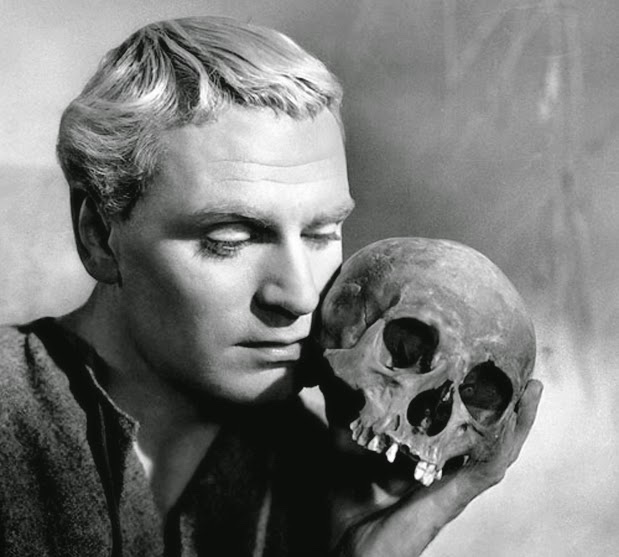
It then hit me that this is what Hamlet meant in the “To be or not to be” soliloquy.
He compares death and sleep. This comparison is as old as humanity. Dead people look like they’re asleep. Sleeping people look dead. Death is like sleep. Sleep is like death.
But Hamlet doesn’t mean that sleep and death are LIKE each other. He means that they are the SAME.
When you sleep, you experience the same jump cut I did in that dentist’s chair. One minute you put your head on a pillow. Suddenly it’s hours later. For a little while, you cease to exist. This is what “not to be” means.
Obviously, dreams offset this effect. Famously, that’s the point of Hamlet’s speech. The rub.
But setting aside dreams, sleep itself is the same as anesthesia. And death.
When you sleep, you’re not “there” in the same way someone under anesthesia is not there. And the same way someone dead is not there.
So what Hamlet says about dreams is really more specific and concrete than we tend to think it is.
Dreams are not an analogy to the afterlife. He’s not saying Heaven and Hell are to the dead man what dreams are to the sleeper.
He’s saying, “If you have dreams when you sleep, why shouldn’t you have dreams when you die?”
If you have dreams when your brain turns off for sleep, why shouldn’t we have dreams when death turns off your brain?
Of course, from the 21st century we could explain to him that your whole brain doesn’t turn off when you sleep but it dies when you die. Entirely. The heart dies and stops pumping blood. The stomach dies and stops digesting food. The brain dies and stops making YOU.
But what Shakespeare didn’t know about neuroscience we don’t know about death.
As much as that jump-cut in the dentist’s chair feels like the final word on death, it isn’t. Hamlet says:
In that sleep of death what dreams may come,
When we have shuffled off this mortal coil,
Must give us pause.
What dreams MAY come? What dreams may EVENTUALLY come? At some point.
Being “not there” is no assurance that you won’t dream. If Hamlet chooses “not to be” and kills himself, he can’t be sure that he won’t dream.
Back at the dentist, what if they kept me under for day? Or a week? A year? Maybe I would feel the same jump cut when they woke me up. Boom, I’m 20 years older like Rip Van Winkle.
But eventually … sooner or later … after enough time … dreams may come.
And when I die, I could be “not there” under the ground long enough to turn to dry bones in the dirt, but dreams may come.
Eventually … dreams may come.

