
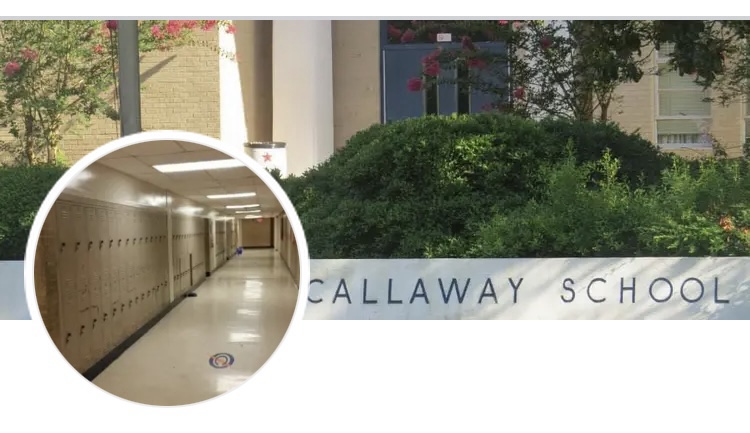
Recently, I spent a few hours on the internet trying to track down someone named Wyndham. I think that was his name. Being sure would have helped my search.
40 years ago, Wyndham played a trick on me. A hostile trick. Nothing extreme. But definitely hostile.
40 years later, however, I suddenly understood why he did it. Or thought I did. And I wanted to track Wyndam down to say “I forgive you.”
Wyndham asked me to play bass in the pit band for the Miss Calloway pageant at his high school. There was no pay, but he promised me that I could switch to guitar and play some fancy stuff at the end of the show as the audience left. Which was fine. I was 15 and showing off was all that mattered.
But when my big moment came at the pageant, no sound came out of my amp. There was a tangle of cables around it, so I couldn’t figure out which one was mine. Meanwhile, Wyndham covered for me on his guitar. He did the fancy stuff.
At first, I took the situation at face value as a technical breakdown. By the middle of the song, I understood that Wyndham had punked me. The tangle of cords was absurd. Nothing about our setup required so many intertwining cables. I wasn’t sure if the amp was even on. It’s difficult to be calm and methodical when you’re supposed to be wailing on a blues song. Meanwhile, Wyndham was doing the wailing.
And why was he ready to cover for me so fast? From the first note!
Oh, and Wyndham, if I recall, was supposed be playing bass for my big guitar number. But I looked over and some new guy was playing bass. He appeared out of nowhere.
Why didn’t HE play bass for the show? Wyndham must have pulled him in last minute just to play for MY blues song so that Wyndham himself could play guitar. Wyndham had planned this trick in advance!
So it wasn’t really a “trick.” Wyndham was not trying to be subtle. The point of the sabotage was to prevent me from playing, not to fool me into thinking it was truly just a technical malfunction.
What was I going to do about it? I had already played the same bass part to The Eagles “I Can’t Tell You Why” for 15 minutes as each contestant strolled across the stage in her shining rayon gown. That’s all Wyndham had needed from me.
But I wasn’t going to give him the satisfaction of seeing my annoyance.
I figured the best response was to make him think I was too dumb to know that this was sabotage. I apologized for not getting the amp to work and thanked him for stepping in so fast.
Then I went home.
It was certainly not the crime of the century, and it was so long ago, so why did I want to tell Wyndham that I forgave him?
First, let me explain why I always wrote off the incident as just an encounter with a flawed, insecure person. I never bothered to think about it any other way.
Wyndham was a snob. Full of himself.
He acted prematurely old. He used formal diction and seemed to lack a sense of humor. He seemed like a middle-aged classics professor.
His father was a doctor, so, by my standards, he was rich. He had an actual Gibson Les Paul, but it also had three pickups. Three!
He played cello in the Jackson symphony orchestra. I went to a performance once after the incident with the pit band, and, sure enough, there he was! And he was sitting by the edge of the stage. Didn’t that mean he was first chair? But he wore that same sour old-man frown as he sawed away at the Dvorak.
At our rehearsal for the pageant, he was very impatient with me. He taught me note-for-note the bass part Timothy Schmit plays on the Eagles record. For this sort of smooth, sexy bass part, you need to have a feel. You need to understand how it works. I could put my fingers in the right places, but I didn’t have the feel. I didn’t know how it worked. This made Wyndham sigh, puff and bark at me with unconcealed agitation.
But then, strictly as a begrudging courtesy, Wyndham let me plug in my guitar. I ripped into a close approximation of Freddy King’s “Hide Away,” a blues shuffle, although I only knew Eric Clapton’s version.
Everyone went crazy. Guys were jumping around and shouting. One kid put his face right down in front the guitar and pumped the air with his arm.
At 15, I was kind of a badass and knew it. I wasn’t a jerk. But I knew how to tear it up.
When we stopped, there was a general cry that we should add the tune to the program.
This is to say that Wyndham high-jacked the song we had only added because of how great I sounded.
Looking back, I see how it was a comedy of errors for poor stuffed-shirt Wyndham. He was this great young musician. He plays in the city orchestra. And he just needs someone half-competent to play bass for a school presentation. He hasn’t given himself any star moments for the event. It’s not that sort of gig. The principal just asked him to put together a band to underscore the program. Now here he has to let some kid from another school get up and showboat on the guitar in front of HIS school.
All he had to do to unwind this situation was make up some bogus reason why we couldn’t include my song, but I guess he was worried that I wouldn’t do the gig. He’d have to find some other stooge to play a boring song for 15 minutes.
And it turned out, he got to do fancy noodling on the guitar for 15 minutes on that Eagles tune. He needed me for that.
So he opted to let me show up in my tie and jacket thinking about how I was going to burn down the house with “Hide Away” just to secure that 15 minutes of “I Can’t Tell You Why.”
But, damn, I never would’ve stooped to playing this dirty trick on another musician, to have him fumble around with cables and plugs and knobs in front of an audience while I stole his moment.
All just to keep someone else from shining.
It was a pathetic, cowardly act of scheming sabotage.
And that’s how I felt about it for 40 years.
Wyndham was just an asshole.
And what took me 40 years to consider was this:
I am white.
Wyndham was black (and presumably still is).
The whole band was black. Most of the students at Callaway High School were black. Most of the audience at the pageant was black. Most of the contestants in shiny rayon gowns were black.
And this was Jackson, Mississippi in 1980. Everybody knows about Mississippi, goddamn.
Wyndham was a musical prodigy. He was likely a straight-A student. But, if he wanted to attend it, my private school, founded by the White Citizens Council in response to forced integration, would not have admitted him. He would’ve been turned away and not for some superficial complication that disguised prejudice. He would have been excluded quite openly just for being black.
His father was a successful doctor. Yet if he had bought a house next door to me in my run-down, white trash neighborhood, there’d have been mass panic followed by hasty white flight. “Oh, Lord! All the blacks will come flooding in now!”
(Which is EXACTLY what happened about 10 years later.)
Wyndham wasn’t threatened by my musical abilities in the least. He just considered the idea of this white kid from the racist school playing “the blues” to close out this almost entirely black event and said, “Nope. That ain’t gonna happen.”
When this obvious, this absurd juxtaposition finally occurred to me, all these years later, I indeed wanted to find Wyndham and tell him “I forgive you.” Those were the words I heard in my head.
Now I understand, so I forgive you for punking me.
If I hadn’t been so oblivious at 15, I would’ve gracefully declined the offer when everybody in the rehearsal room was cheering for me to play “Hide Away” at the pageant. Wyndham had to find a way to prevent this without explaining to me what I should have understood already.
I left him no choice but to punk me.
What if I had been a dancer and Wyndham needed me for a group number? Would I have demonstrated my tap dancing skills or some disco style I learned from Soul Train then think I could or should do a solo performance in front of a mostly black audience … while Wyndham watched from the wings?
I knew that actually seeking him out now and saying “I forgive you” would be crazy. On the other hand, in my heart, I thought, “If we don’t think of such epiphanies about racial inequality as a good reason to do something crazy, how are we ever really going to change the world?”
I could picture a 60-year old Wyndham. In a cardigan, on a porch. Maybe he’s a conductor somewhere. But there’s that same sour frown, that same seriousness on his face. He opens his laptop and reads: “Dear Wyndham, I’m very much aware that this will be a bizarre email. But I trust that you’ll indulge me.” He keeps reading. Then, as a mockingbird sings in the big oak in the yard, that serious face twitches and contorts then breaks into a grin. Then a laugh.
Ah … small progress … delayed progress … but progress nonetheless, right?
It took too long … a few days … a week … a month … to realize that the idea of saying “I forgive you” to Wyndham was offensive. That having that feeling at all was offensive.
To explain why it’s offensive is like looking for trees in the forest. An old white guy recalls a young black man pushing back against oblivious racism and thinks “I forgive him.” Duh. Offensive.
I might as well track down Wyndham and say, “As an understanding white person, I validate your outrage. As the benevolent white man, I retrospectively grant you permission to punk me. I make these allowances in generous acknowledgment of your frustration with the de facto apartheid conditions of Jackson, Mississippi in 1980.”
“I forgive you” is offensive precisely because it isn’t “Please forgive ME.”
In a sense, the week or month during which I was so eager to forgive Wyndham is far uglier than the forty years I spent thinking he was just an asshole.
All those 40 years during which I was just some white trash idiot, Wyndham was simply a dorky cellist with a fragile ego. The second I tried to be “progressive” and think about the social justice factors relating to the situation, Wyndham became a symbol, the oppressed black man struggling against my own inherited and unjust power over him, with recourse only to base guerrilla tactics in order to preserve the cultural sanctity of an African American gathering.
In my opinion, this whole mentality is far more objectionable than just seeing Wyndham as some envious jerk.
But it gets worse.
Who even says that this was really about race anyway?
I mean, it’s nice of me to finally notice that Jackson, Mississippi had a problem with bigotry. I suppose that I could be commended for looking back and recognizing the racial tensions underlying my interaction with Wyndham and Callaway High School.
But who, besides me, says that this was about race? If he’s still alive, there’s some actual person out there (who might be named Wyndham) who knows why he sabotaged my blues moment at Callaway High School. He’s the one who knows whether or not racism was a factor. The only one. Wyndham is the only one who can tell us whether or not he unplugged my amp to fight white privilege. But he’s not here.
If he were here, there’s a good chance he’d say, “What on earth are you talking about? You think I screwed with your rig to stop you from playing a blues song for a black audience? You think I gave a damn? Jeez, I screwed with your amp because you weren’t that good. I didn’t want some geeky kid cranking up the volume to noodle on a generic blues tune after I worked so hard to put together a slick, professional music program. I had a duty to ensure quality and tone for the whole event.”
An even more withering idea occurs to me. There’s a chance Wyndham could say, “Huh? You thought I sabotaged you? No, dude, I could see you were having technical issues. So I just jumped in. I had to!”
What about the other bass player? Huh?
“I wanted someone who could play that song well! Again … I was treating this pageant as a musical director in the most professional manner I could. I didn’t expect to have to play YOUR corny-ass blues song!”
What’s most demoralizing is how catching myself being a racist doesn’t shock or surprise me.
My Mississippi childhood hardcoded me with racism. I was a teenager before I had my first real inkling that I needed to change how I saw black people, that I needed to try not to be prejudiced. That’s how we put it then: “You shouldn’t be prejudiced.”
During middle school, my parents couldn’t afford the white supremacist private “academy” for a little while, so they put me on the bus to West Jackson where I was often the only white kid in the class. One day I couldn’t get to the pencil sharpener. I asked a girl sitting next to it if I could toss her my pencil. “My great grandmama sharpened your granddaddy’s pencil!” she snarled at me.
From that moment, I began to wake up.
But the core damage had been done. For people with my upbringing, racism is like alcoholism.
For many alcoholics, the road to recovery begins with the realization that there is no cure. For the rest of your life, you wake up and say “I am an alcoholic.” Your daily priority is to avoid having a drink. You can go 40 years without a drink and still have to be vigilant. Because you never stop being an alcoholic.
And if you wake up wearing a chicken suit in a Tijuana hotel and can’t remember the last few days, you’re not surprised. You’re not astounded. The situation is not surreal. It is familiar. Ah, yes, I was a foolish to think that there was no harm in taking a sip of champagne to toast the groom.
And I’m never surprised when I catch myself being a racist.
But what is surprising in this case is how the racism felt like an absolutely sincere effort to recognize my white privilege.
You have to understand: I saw the damn light! That’s how it felt. I saw myself in that band room surrounded by black teenage boys cheering and clapping. I saw Wyndham’s look of disgust. I cringed at the image of myself bending my “soulful” notes out of my guitar in front of an audience of black people asking themselves, “Why him? Why is the one white kid up there playing the blues?” And I understood … really really UNDERSTOOD … what Wyndham was trying to tell me. Forty years later, I finally got it. And I really wanted to tell him that I got it. I still do.
But this whole detailed, technicolor vision of my toxic whiteness is the product of my toxic whiteness. My racism created the idea that Wyndham was reacting to my racism.
Again … AGAIN … I don’t know what Wyndham was “telling” me. I don’t know IF he was telling me ANYTHING.
Not a single soul … not Wyndham or anyone else … not a single soul said a single word about race.
A old white dude in an apartment in Park Slope, Brooklyn decided in a total vacuum that it was about race.
Weird.
 Kenny Nowell